Confidence
Judo strengthens a child’s trust in their own ability. They learn to move, fall safely, stand up, and try again.
 SJAA
Southern Judo Academy
SJAA
Southern Judo Academy
CHILDREN / COMPETITION / ADULT JUDO · BJJ 16+
Children’s Judo with safety, discipline, and a clear coaching structure. Brazilian Jiu-Jitsu for ages 16+, focused on position, control, and composure on the ground.
FOR PARENTS
Here, Judo is presented as an educational sport. The message is not fear or aggression, but trust: what the child learns, who guides them, and the environment they train in.
Judo strengthens a child’s trust in their own ability. They learn to move, fall safely, stand up, and try again.
Every class begins with rules, bowing, cooperation, and boundaries. Children learn to respect themselves, their training partners, and the space.
Training is not an individual display of strength. It is a relationship of trust, discipline, and shared progress within the group.
WHAT JUDO IS
Judo is not limited to techniques. It is a system of physical education, technical training, and ethical development. Children first learn how to fall safely, move with balance, work with a partner, and respect rules.
This foundation matters to parents: a child is not placed in an uncontrolled fighting environment. They enter a class with structure, guidance, rhythm, and clear boundaries.
JUDO PHILOSOPHY
Jigoro Kano created Judo as a path of education, not merely a collection of techniques. For parents, that philosophy matters because it shows how training becomes character.
In Judo, children do not learn to dominate. They learn to manage energy, fear, failure, and success. Technique has value only when it serves self-control, measure, and respect for another person.
The path of Judo begins in the body, but it is completed in character.
For a child, a Judo class is a workshop in behavior. They wait their turn, listen to instructions, train with different partners, accept correction, and learn to keep trying without losing respect.
Every fall becomes a lesson: safety first, then technique, then self-awareness.
Best use of body and mind: children learn not to waste force, but to think before they act.
Mutual benefit: one person’s progress does not come at another’s expense. The group grows together.
Respect in practice: courtesy is not a formality; it is the framework that keeps training safe.
BJJ 16+ & HISTORICAL CONTINUITY
The new Brazilian Jiu-Jitsu program for ages 16+ is not presented as a break from the academy’s identity. It is a related study of control, position, and composure for older teenagers and adults.
Brazilian Jiu-Jitsu is not foreign to Judo. Its well-known historical line passes through Mitsuyo Maeda, a Japanese Kodokan judoka who taught in Brazil and became connected with Carlos Gracie. From there, the Brazilian tradition developed a deeper emphasis on ground fighting, positional control, and submissions.
BJJ does not erase its Judo root. It continues it in another field: more ground work, more time, more patience.
In BJJ, students learn not to panic under pressure. They learn to breathe, think, gain position, and use leverage instead of raw force. For teenagers 16+ and adults, this process builds self-control, humility, and practical confidence.
In Judo, balance is lost and rebuilt standing. In BJJ, it is rebuilt on the ground.
UNESCO & CHILD DEVELOPMENT
UNESCO connects physical education and sport with life skills, respect, inclusion, and healthy social behavior. That is the right foundation for speaking about Judo for children.
At Southern Judo Academy, Judo is not presented as “fighting.” It is presented as an organized educational process: rules, self-control, effort, mutual benefit, and gradual progress.

THE ACADEMY
The Southern Judo Academy dojo is built primarily around Judo and adds Brazilian Jiu-Jitsu for ages 16+ with the same standards: guidance, respect, technical progression, and a clear coaching framework.
FACILITIES
The academy is housed in a 200 sq.m. space on Kalamakiou Avenue, with a reception area, protective padding in the training area, tatami, and shock-absorbing support for safer falls.
A space built for serious tatami training, with a clear athletic identity and a welcoming environment for children, teenagers, and parents.
Under the tatami there is a dedicated shock-absorbing layer, offering better fall absorption and safer training for every age.
PROGRAMS
In Mini Juniors, the emphasis is safety and motor development. In Juniors, the technical foundation and focus are built. For ages 16+, Brazilian Jiu-Jitsu adds emphasis on ground control, position, and composure.

The first contact with training is playful and structured. The goal is balance, coordination, flexibility, speed, endurance, and confidence without pressure.

At this age, the technical foundation is built: falls, grips, posture, focus, and an understanding of Judo values through structured training.

For athletes who need greater technical precision, competition experience, and deeper tactical development, with training that respects age and progression.

For adults who want to discover Judo, improve fitness, learn practical self-protection, and move better in a respectful environment.
A new program for teenagers 16+ and adults who want to study ground control, position, leverage, and submissions with technical method, respect, and safe progression.
COACHES
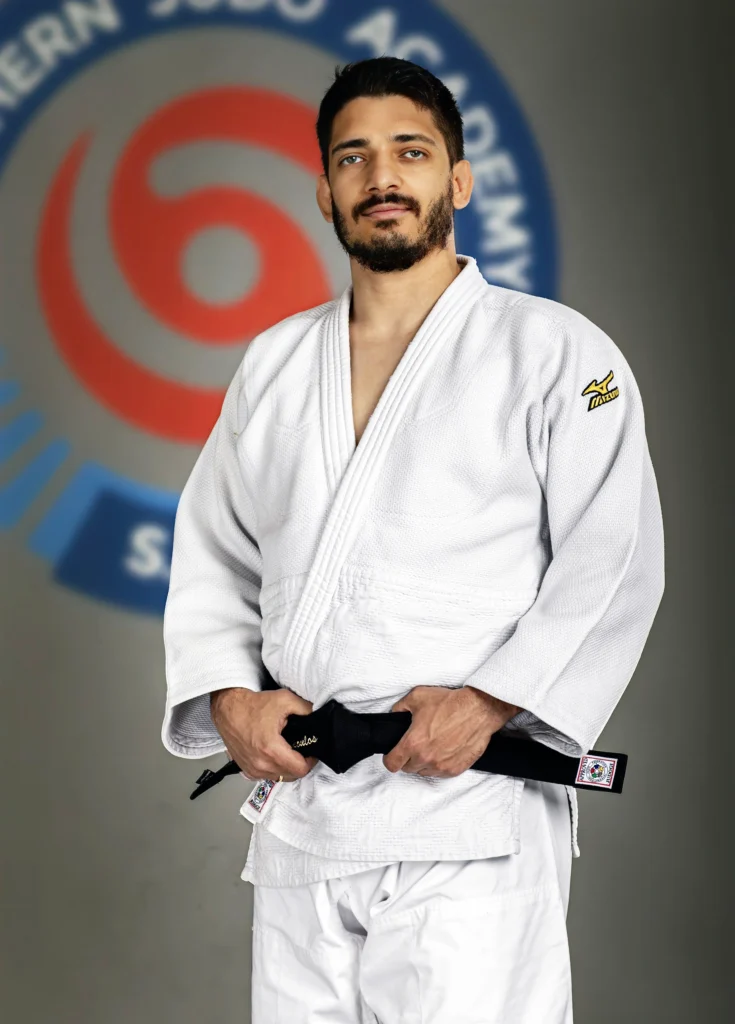
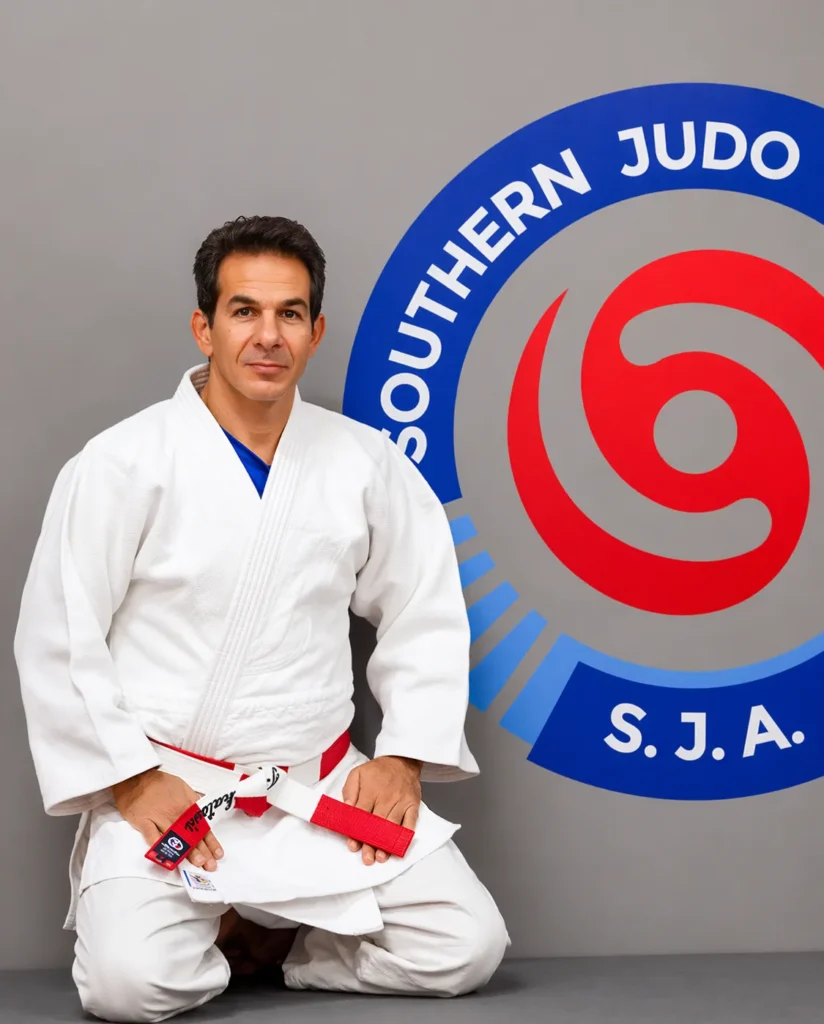
The coaching team is presented with clear roles: Konstantinos Lymperopoulos as Head Coach, with Takis Vakatatsis as supervising coach.
Head Coach
Head Coach
The Head Coach of Southern Judo Academy carries the day-to-day coaching responsibility on the tatami and sets the standard for technique, behavior, and children’s development.
SUPERVISING COACH
SUPERVISING COACH
Takis Vakatatsis acts as supervising coach, adding high-level experience, competitive history, and technical direction to the academy’s overall coaching philosophy.
GOOGLE REVIEWS
Real reviews from parents and students, with ratings, names, photos where available, and the text as it appeared on Google.
A model academy, first for the proper education of our children and then for their empowerment. The coaches, Mr. Takis and Mrs. Vasiliki, truly represent fair play and character, without any trace of unhealthy competition despite the nature of the sport.
Mr. Takis and Mrs. Vasiliki are more than good coaches. They are educators as well, and the academy is truly exceptional.
An excellent academy. Experienced teachers and proper educators. Values, principles, and technique are taught together.
Excellent teachers, a beautiful and functional space, and advanced training methods led by a champion of the sport.
A perfect environment, scientific training, and the best for our children. Well done; you have our trust.
Most importantly, the children look forward to training.
Excellent work by experienced people who love the sport and care for children.
The best teachers for children. Well done.
EXCELLENT SPACE, EXCELLENT ATTITUDE, KNOWLEDGE, LEVEL.
Perfect.
The teacher is very capable, helpful, and friendly. My child adores him...
SCHEDULE
Times are presented clearly because schedule fit is a real decision point. If the timetable does not work for the family, no visual appeal is enough.
FIRST VISIT
Parents can clearly see the coach, the communication style, and the level of control inside the class.
The first experience is not a contest. It is basic movement, falls, boundaries, and safe adaptation to the tatami.
Age, experience, and the child’s character guide the program recommendation, not pressure for a quick registration.
TRIAL CLASS
The best proof is to see the space, the coaching approach, and how your child responds in the first class.